

Soft, fluffy, and unapologetically buttery, my brioche dinner rolls are what happens when bread decides to “dress up” for dinner. Enriched with eggs and plenty of butter, the dough bakes into golden, tender rolls with a tender crumb and a slightly sweet flavor that pairs with everything from holiday roasts to a swipe of salted butter and honey.
This post may contain affiliate links, for more information check out disclosure policy.
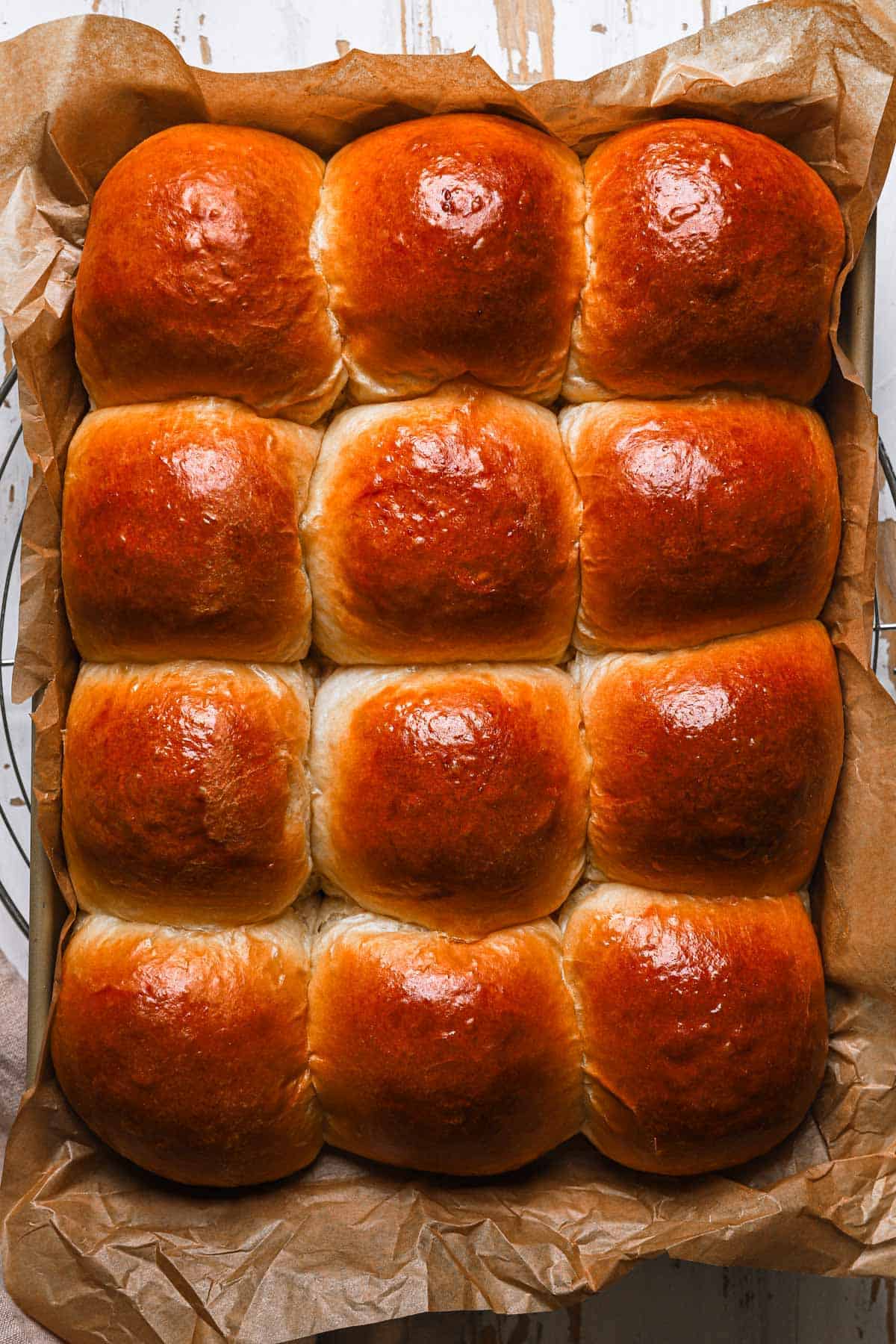
I don’t need to tell you what sets these fluffy rolls apart. The Brioche in the title makes it pretty clear, but if I am completely honest, it does not do it justice. The only way to truly understand how fluffy and buttery these are is by making them. And making them is a baking adventure of its own, the dough is soft and smooth, the kind that bounces with every touch.
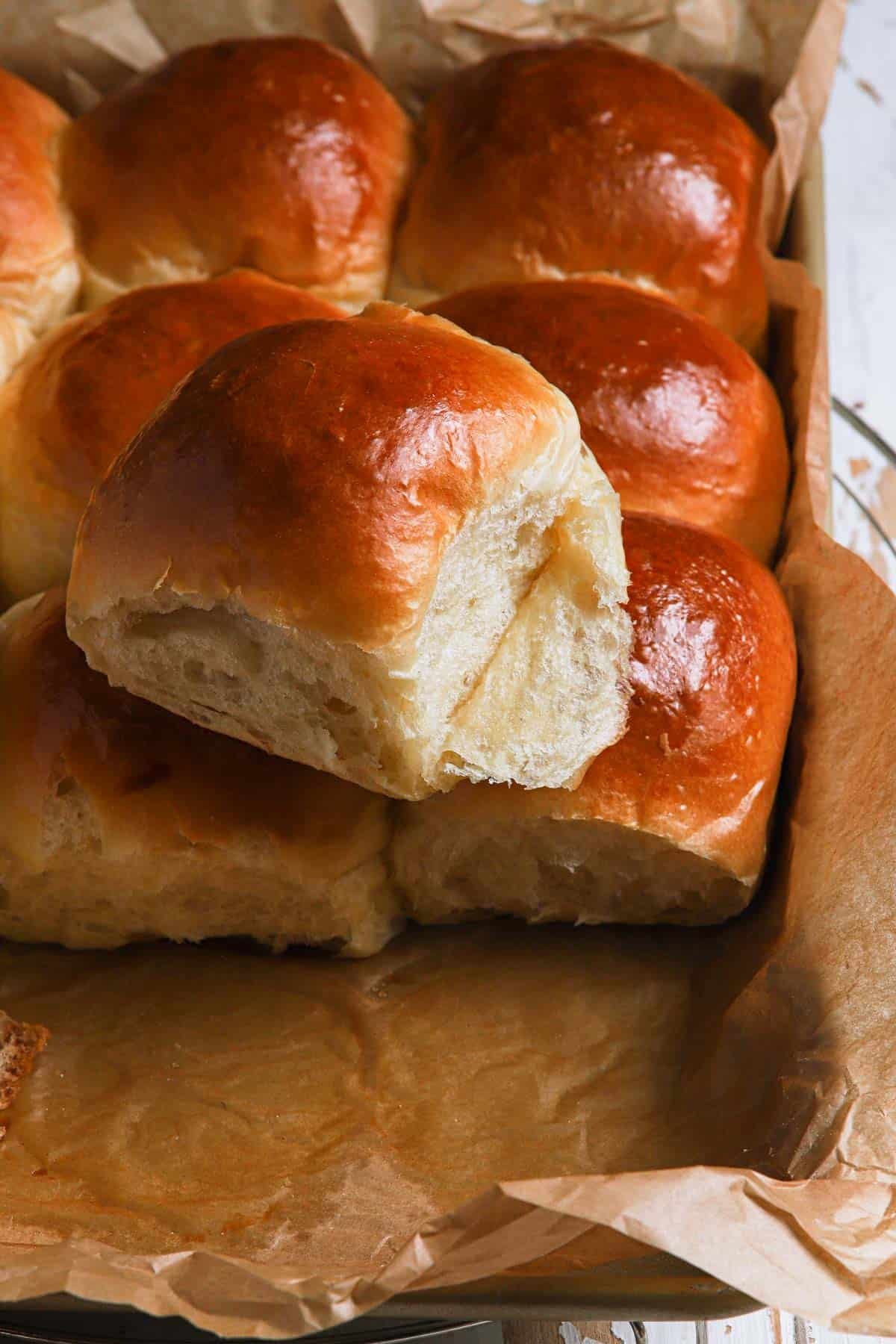
I like to serve them as part of a big dinner, because they are best when pulled and teared, smeared with a big dollop of butter or dipped into a saucy plate. For a big juicy burger give these Tender and Sturdy Burger Brioche Buns a try.
Key Ingredients
The complete recipe including measurements is at the bottom of this post in the recipe card. Here is a quick recap to some of the ingredients, including substitutions when possible.
- Unbleached All-purpose flour. Unbleached is super important. Don’t worry about bread flour, I know it is very common to use it when baking brioche, but this is a quick recipe that uses less butter than the classic brioche. Using bread flour, might dry the rolls a bit.
- Instant year. The best for the job, because they can be mixed directly into the flour with no need to activate them. To use active dry yeast, please see recipe notes in the recipe card.
- Sugar, Salt. Both do much more than sweeten and adding salt the dough, the sugar feed the yeast, while the salt encourage elastic gluten formation which gives us a bouncy stretchy (but not chewy) dough.
- Dry milk powder. Other than adding flavor, it is high in protein, much like eggs, and during baking they stretch and expand the dough so the rolls puff higher.
- Lukewarm milk. Lukewarm as in 90°F, be very careful if too warm it will kill the yeast.
- Egg yolks and whole egg. I wanted this recipe to have a super tender and soft bite but also a short proof time so I replaced some of the butter with extra egg yolks.Unsalted butter, soft. Do not use salted butter, it is hard to control the amount of salt different brands add to salted butter.
Let’s Bake
Step one: make the dough
Like all yeasted recipe this one also calls for two proofing times, making the dough is pretty stright forward, but you do need to pay attention to some details which requires you to plan ahead. Here are all the small and important details to set you up for success:
- The ingredients must be at room temperature, or you’ll end up with a dense block of dough. So plan ahead and set them ahead of time.
- Pay attention to the dough and not the timer. I did add some timing for each step when making the dough. But you mixer and kitchen are different then mine, so pay attention to the doug and do not over mix.
- Start with mixing the ingredients using the paddle attachment, then when you have a shaggy, ugly mass, replace it with the paddle attachment.
- Start adding the butter once a dense doug is form, if you over mix it, the dough is going to be too tight to properly incorporate the butter.
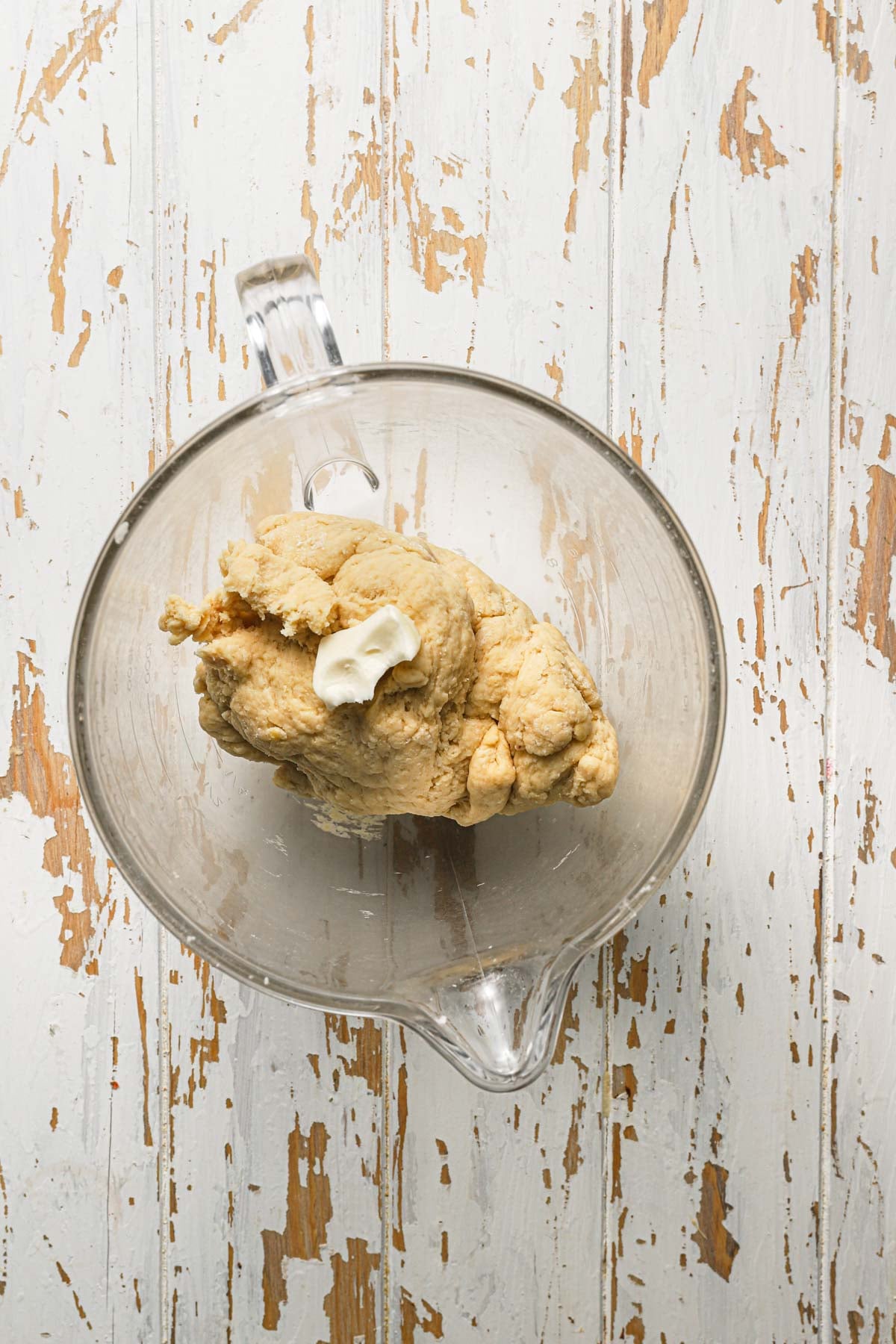
- Add the butter one piece at a time, and wait for it to be mostly incorporated before adding the next one.
- Incorporating the butter takes time, and the dough might seem messy, but don’t stress and give it the time it needs.
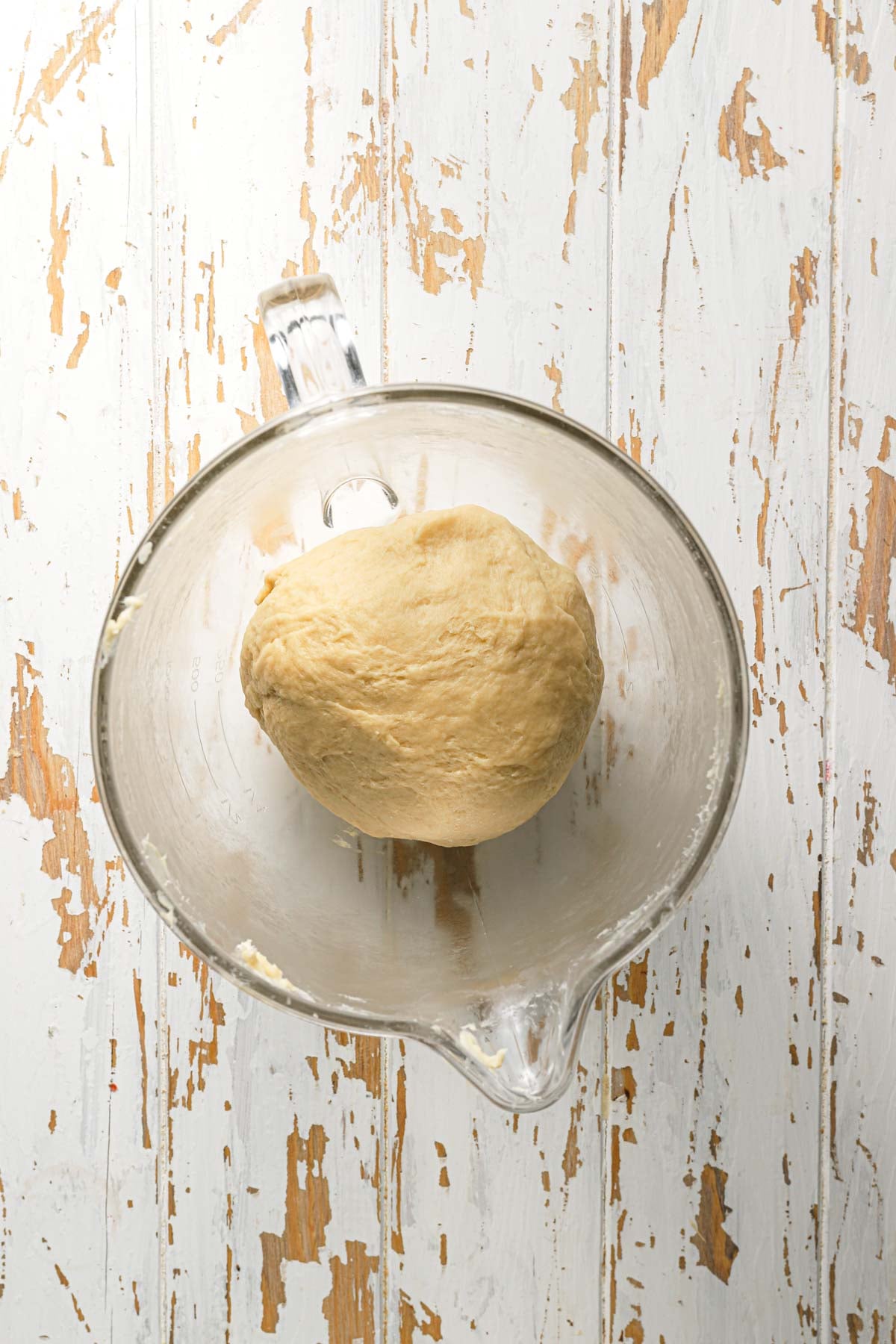
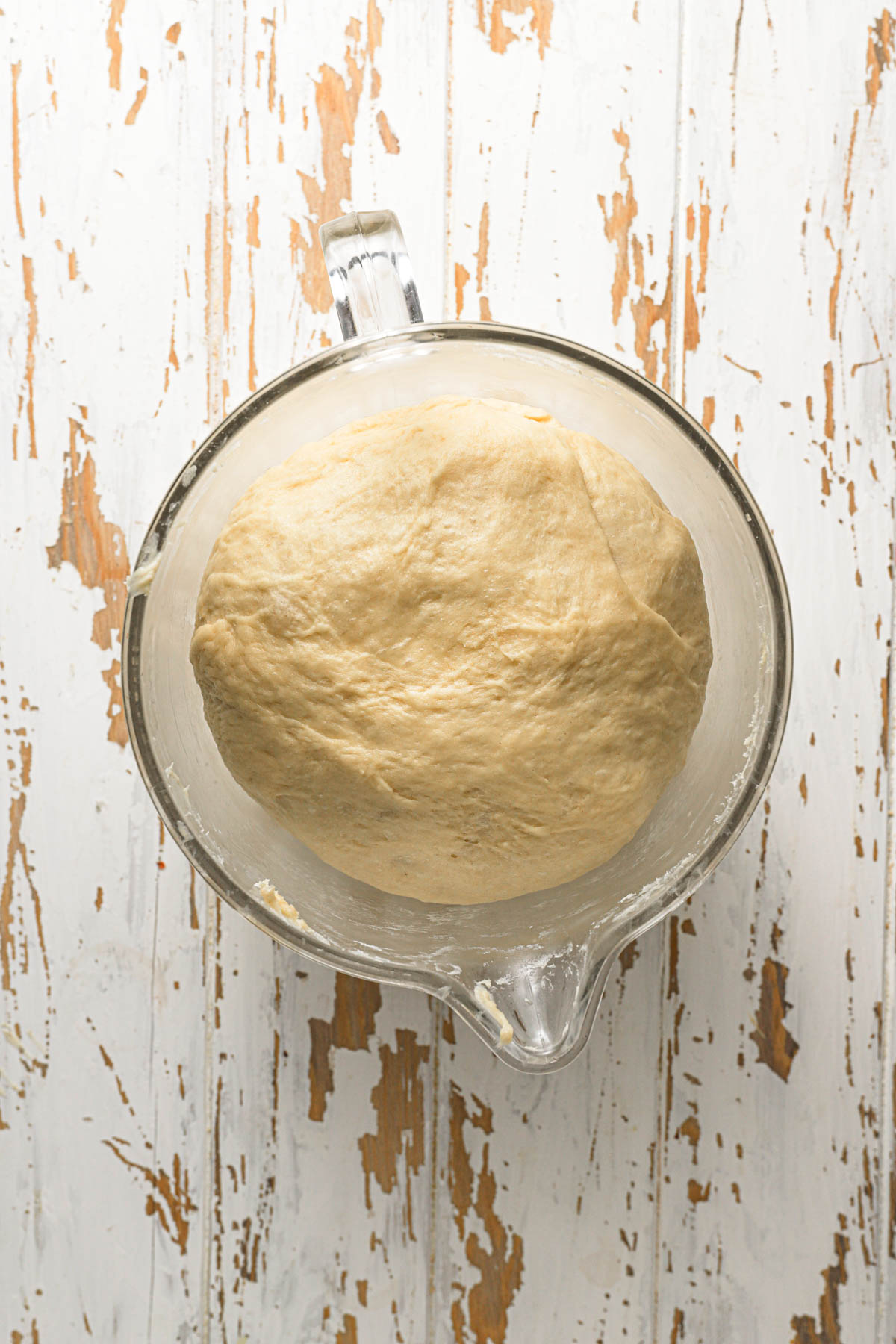
- The dough is ready when it is soft, elastic and slightly sticky. Do not add more flour. During the rest time, the flour will absorb some of the water, and the dough will be easy to work with.
Step 2: Shape and Bake
Classic dinner rolls are shaped into a ball, then as they puff and bake they touch each other and get a straight edges.
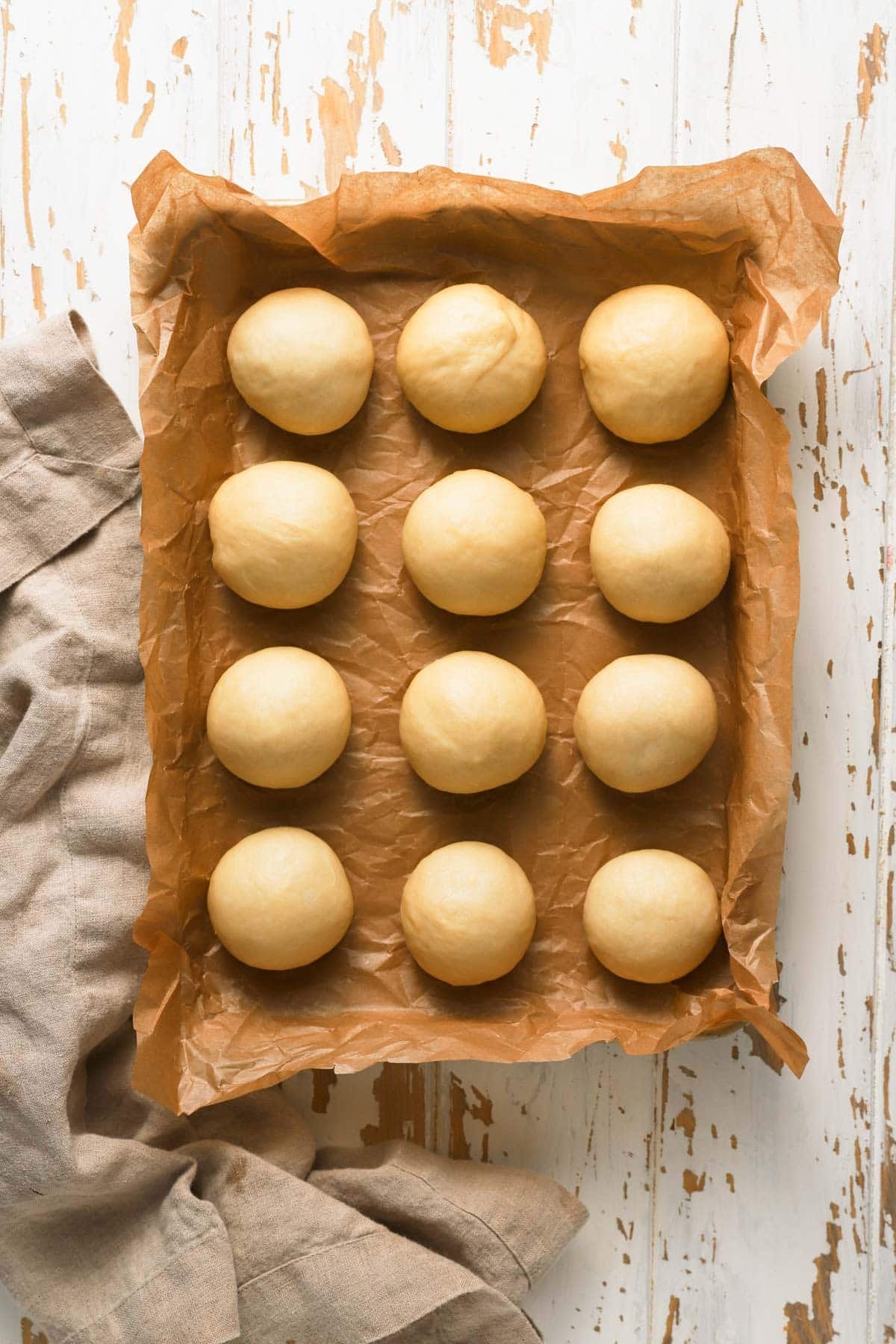
- For a smooth ball: cup your hand over the divided dough, then roll it as fast as you can moving clock wise. You should feel the dough but not press it, as you roll it it will shape into a smooth dough.
- If your hands tend to be sweaty, dust them with some flour before.
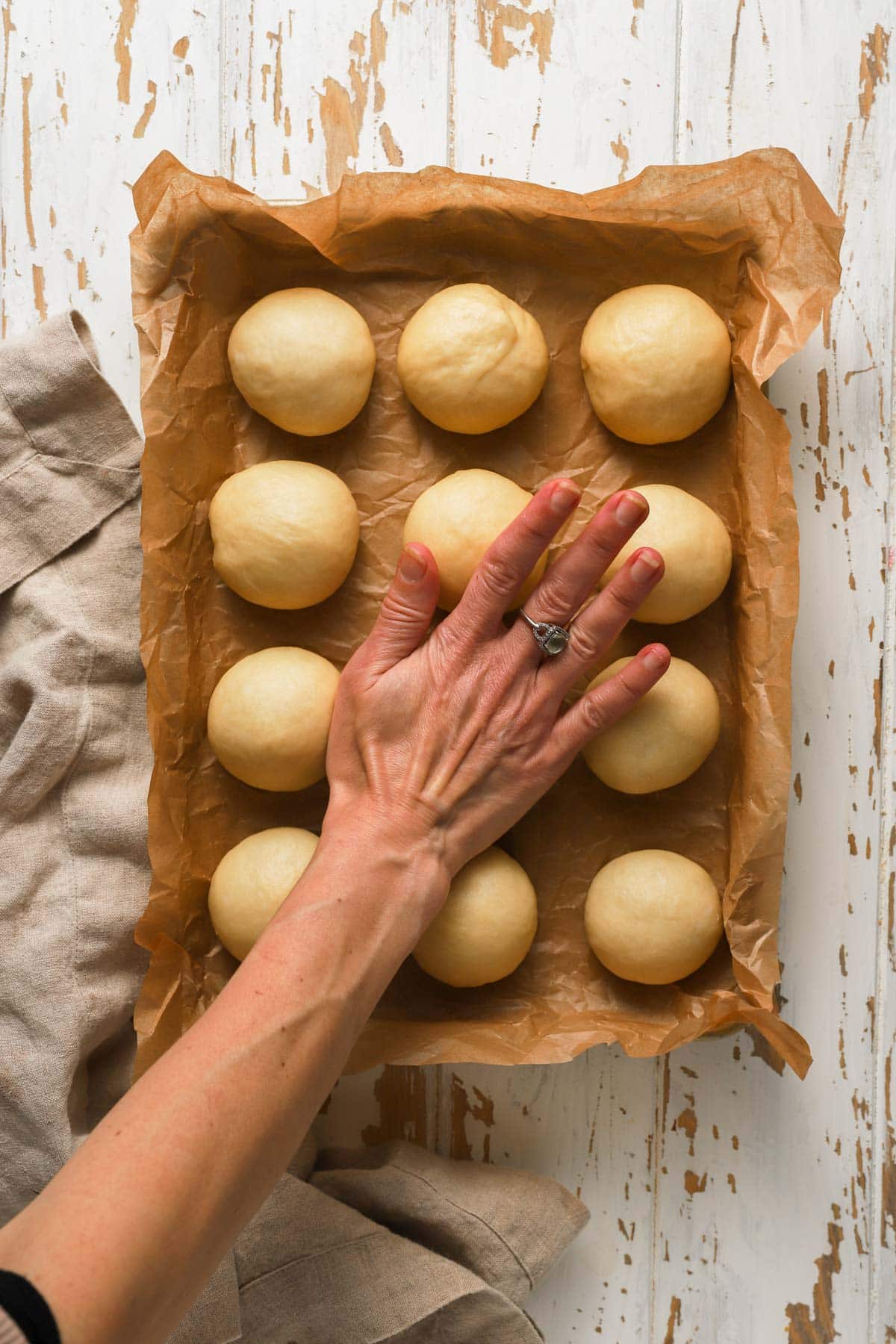
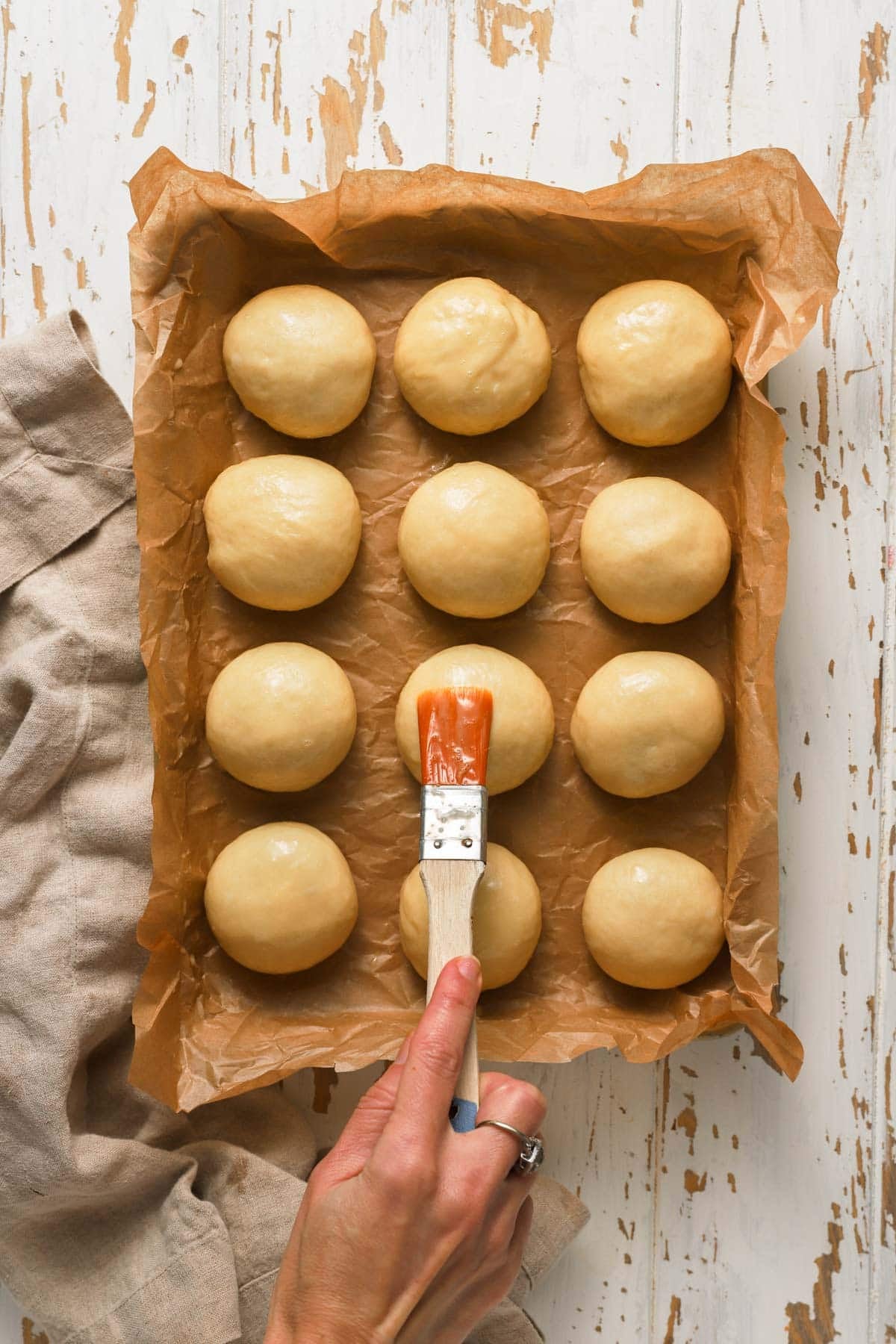
- Slightly press the rolls before brushing them with the egg yolk, other wise the top might puff like a pointy egg.
- The rolls are ready when they are golden brown, and the inner temperature is 180°F. Avoid over baking, it might dry them out.
Store and Make Ahead
Make ahead: reduce the yeast amount to 1 1/2 teaspoons, allow the dough to proof for one hour at room temperature then refrigerate over night. You can shape the rolls when the dough is cold, and then let them warm to room temperature and rise.
Store any leftover brioche dinner rolls in an airtight container at room temperature for up to 2 days. You can also freeze the rolls for longer storage – wrap them tightly in plastic wrap and foil before placing them in the freezer. To reheat, thaw the rolls at room temperature and warm them in the oven for a few minutes before serving.
Wrap leftovers in aluminum foil and bake at 350F in a preheated oven for 5-8 minutes, or use them to make some Brioche French Toast Casserole.
Fluffy and Tender Brioche Dinner rolls
Ingredients
- 3 1/2 Cups (420g) All-purpose flour
- 1/4 Cup (30g) Dry milk powder
- 3 Tablespoons (38g) Sugar
- 2 1/4 teaspoons Instant yeast
- 3/4 teaspoon Salt
- 1 Large Eggs at room temperature
- 2 Large Egg yolk at room temperature
- 1 Cup (240ml) Milk at room temperature
- 1/2 Cup (113g) Unsalted butter, soft and cut into 1/4 inch pieces
- 1 Large Beaten egg for egg wash
Instructions
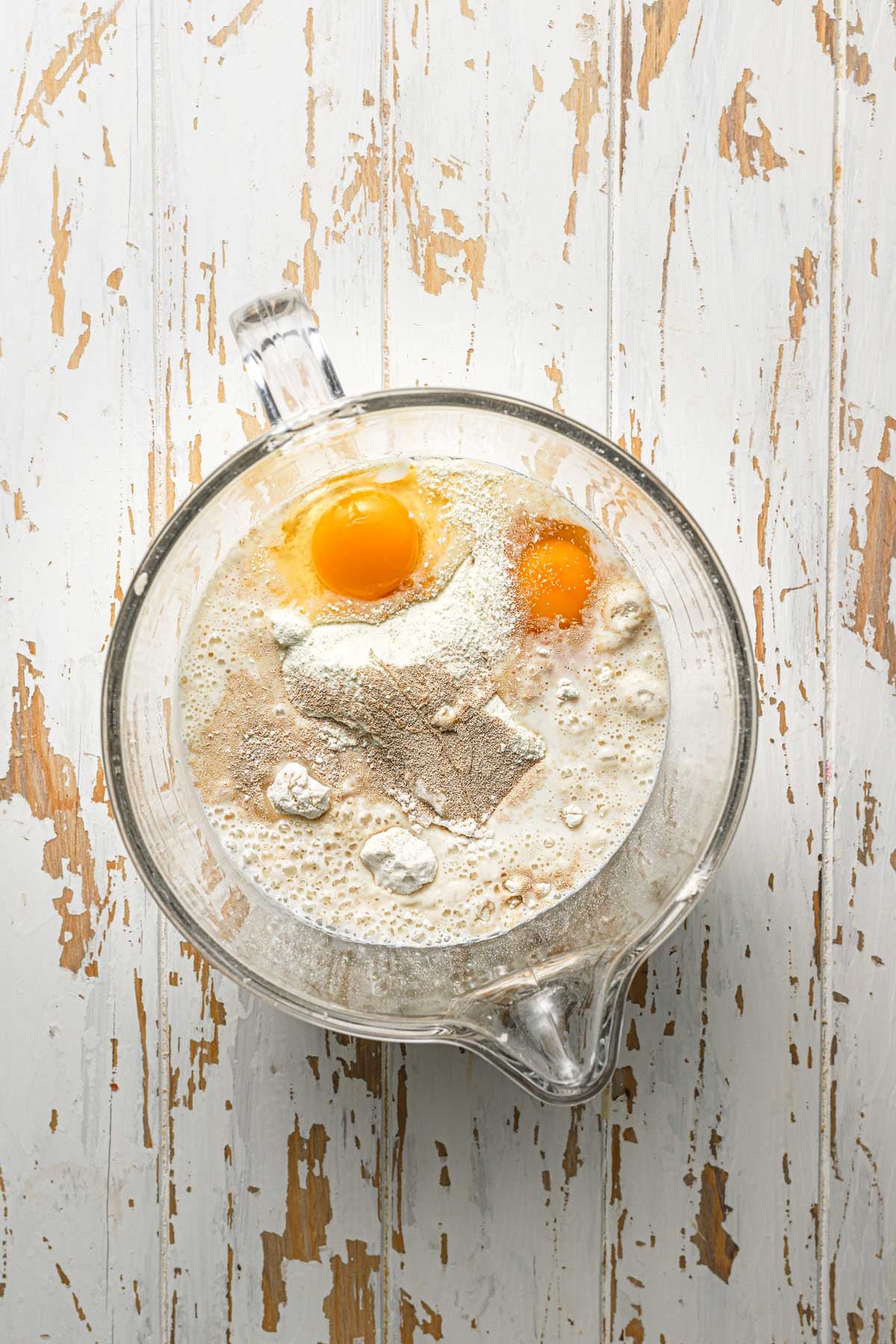
- Place the flour (420g), dry milk powder (30g), sugar (38g), yeast (2 1/4 teaspoons), salt (3/4 teaspoon), 1 egg, 2 egg yolks, and milk (240ml) in a stand mixer bowl.
- Mix on low using the paddle attachment until you have a shaggy mass and all of the flour has been hydrated.
- Replace the paddle attachment with the dough hook and mix for about 2 minutes. You should have a sticky, rough dough.
- With the mixer on medium speed, add the butter (113g) one piece at a time, waiting for each piece to be incorporated.
- Increase the speed to medium-high and mix until the sides and bottom of the bowl are clean and you have a smooth, elastic dough that is slightly sticky.
- Cover the bowl with plastic wrap and place the bowl in a warm spot to rest for about one and a half to two hours or until double in size.
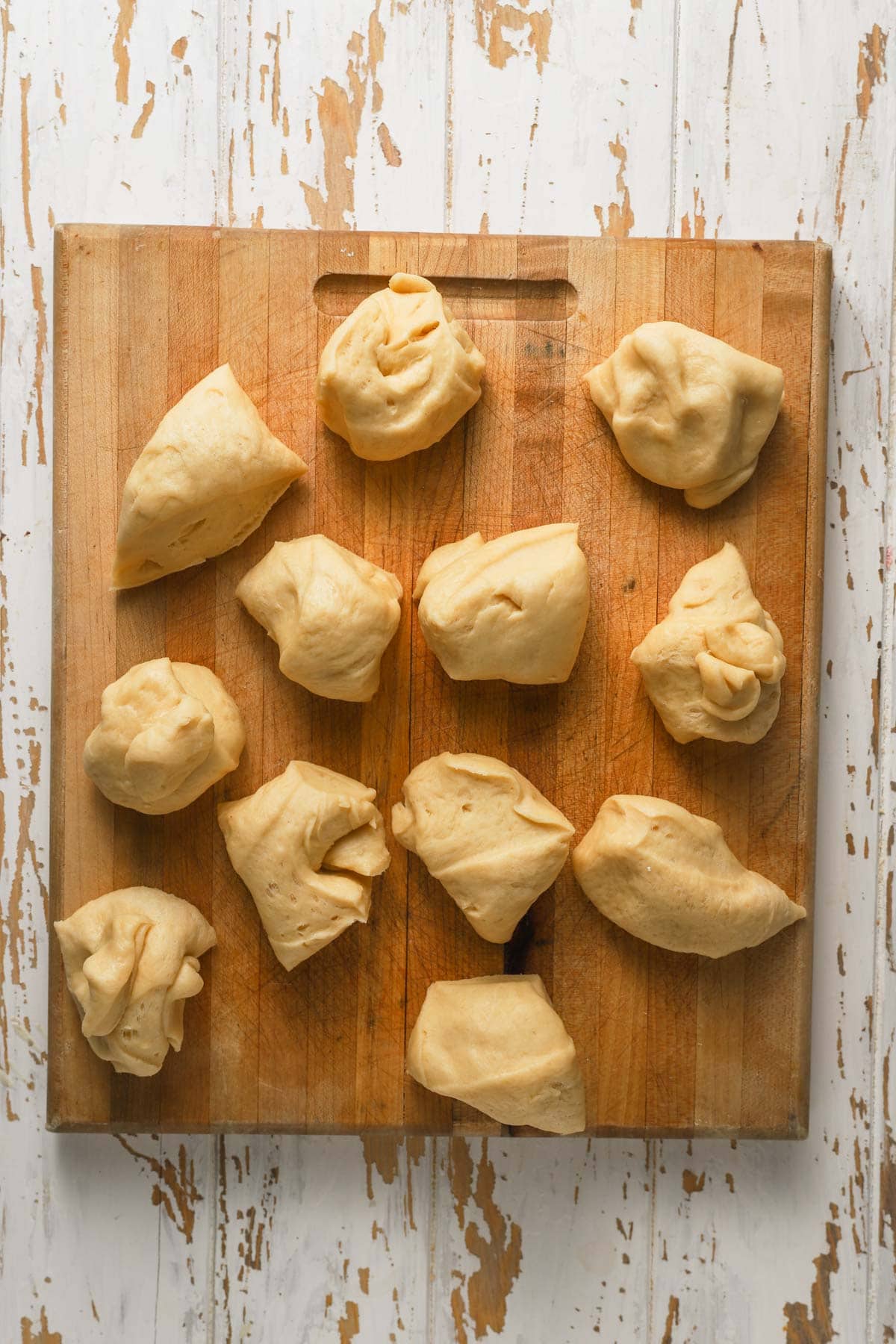
- Punch the dough to deflate the air, then divide it into twelve equal portions. Each approx. 70g.
- Roll each piece into a dough ball and place it on a baking sheet lined with parchment paper. I used a 9×16-inch cookie sheet, but you can use a larger pan if you don't wish the buns to stick to each other.
- Brush the buns with the egg wash and set a side to rest again for about 90 minutes, or until double in size.
- Bake at 350F over the middle oven rack for 22-25 minutes. Until the tops are golden brown and the internal temperature is 180-200F.
- Remove from the oven and allow the rolls to cool slightly before serving.
Notes
- The recipe yields twelve regular size brioche rolls, or 16 small ones.
- To use active dry yeast: increase the yeast amount to one table spoon, then pour the milk into the bowl of your stand mixer, add the yeast and one tablespoon if the sugar. Mix and set aside to activate for about 20 minutes, or until you have a thick layer of bubbles.


This is the roll recipe I’ve been searching for. I’ve tried countless roll recipes, and always thought I could do better. These are absolutely light and delicious; the perfect texture. The dough seemed too sticky while making, but like Dee said, be patient; the dough does come together. My search is now over for the perfect roll.
thank you so much Shelly! I am so happy you enjoyed the recipe.
Hello! I perused the recipe and unable to find an over temp to initially bake these rolls. What do you recommend?
Thank you!
Bake it at 350F.
I’ve made a brioche loaf, but never individual buns. These turned out great in a 9×13 pan. The whole family raved about them at Christmas dinner! You definitely need to let the mixer go for awhile but these are worth it!
thank you Sarah, so glad to hear you and your family enjoyed it.