

Swiss meringue buttercream is smooth, creamy, light and airy meringue perfect for filling, topping, and piping. In this post we will break down the steps one by one and help you simplifying the process and master it in confident.
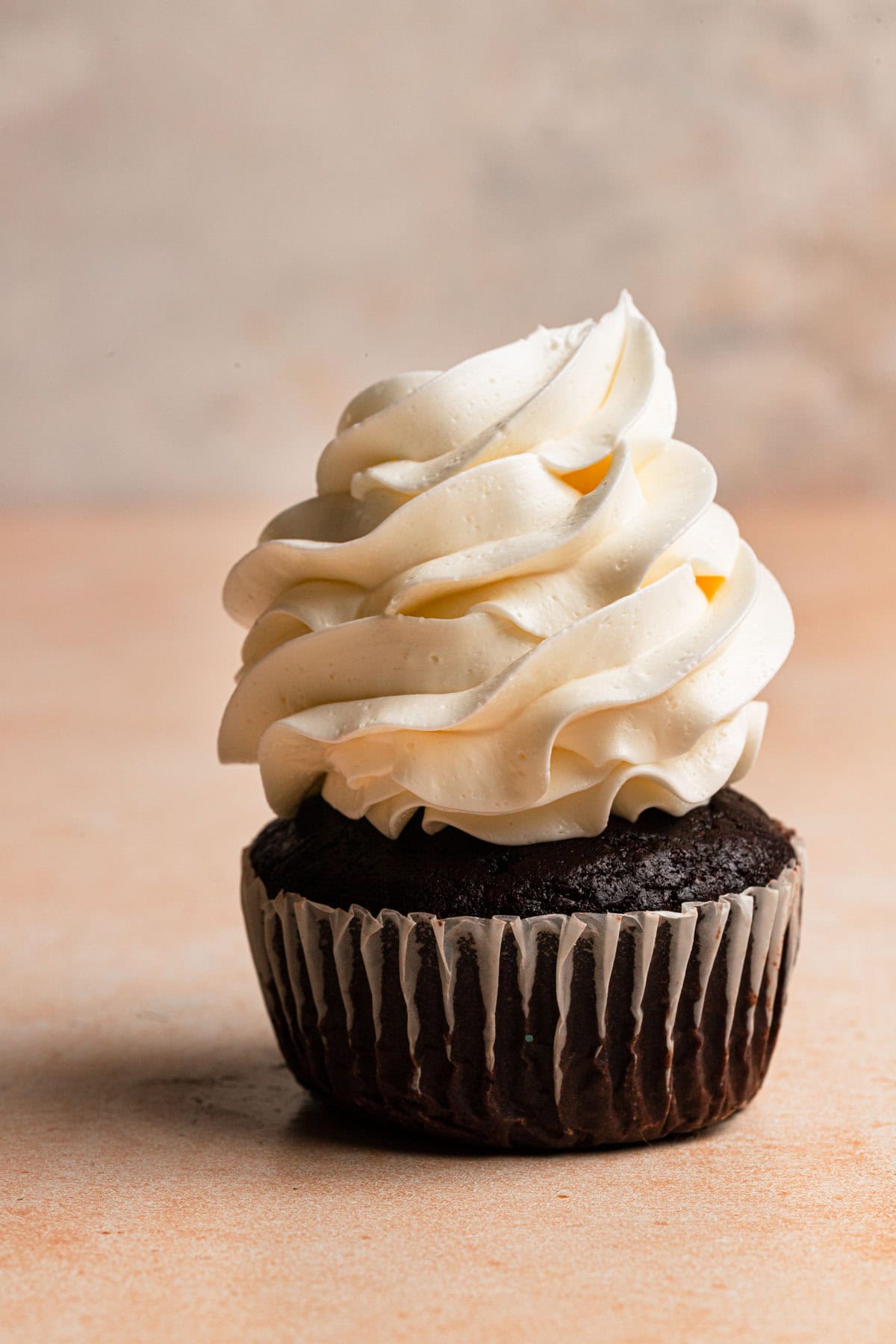
Swiss meringue buttercream might take an extra step or two, but it is worth it. It is smooth, creamy, easy to apply, it is delicious and does not dries out like American Buttercream. It is also stable enough to top with fondant once chilled and solidified.
This is the perfect cream to frost a classic 8-inches Layer Cake, or add flavors for special recipes, like these Chocolate Oreo Cupcakes.
What Is Swiss Meringue Buttercream?
Buttercream, as the name suggests, is a frosting made with a high percentage of butter: usually at least 50%. There are different styles, the simplest being American buttercream, which is typically just butter and powdered sugar in equal parts.
Swiss meringue buttercream, on the other hand, is made by incorporating butter into a stable, slightly warm meringue. To create the meringue, egg whites and sugar are gently heated together over a double boiler until the sugar dissolves and the mixture reaches a safe, pasteurized temperature. Then, the mixture is whipped into a thick, glossy meringue before butter is gradually added, resulting in a smooth, airy, and less-sweet frosting.
Ingredients
- Egg whites. What make for a light and fluffy meringue, I recommend separating the eggs when they are cold from the refrigerator. Cold egg yolk separates easier and reduces the risk of breaking and dripping into the egg white.
- Granulated sugar. White sugar and not powdered sugar or brown sugar.
- Unsalted Butter. It is impossible to control the amount of salt that is added to the butter so I recommend not using salted butter.
- Vanilla extract. It really does rounds up the butter and sugar flavor. I like to use vanilla bean paste for the beautiful specks of vanilla.
- Cream of tartar. Just a pinch and it is optional, it helps stabilizing the meringue.
Make It
The complete recipe including measurements can be found below in the recipe card.
Below are step-by-step visual images including tips and trouble shooting issues you might come across
Make The Meringue
- Separate the eggs. It is crucial that the egg white are completely clean from fat and egg yolks. Even the smallest drop will prevent the meringue from forming. Take an extra step and clean your bowls.
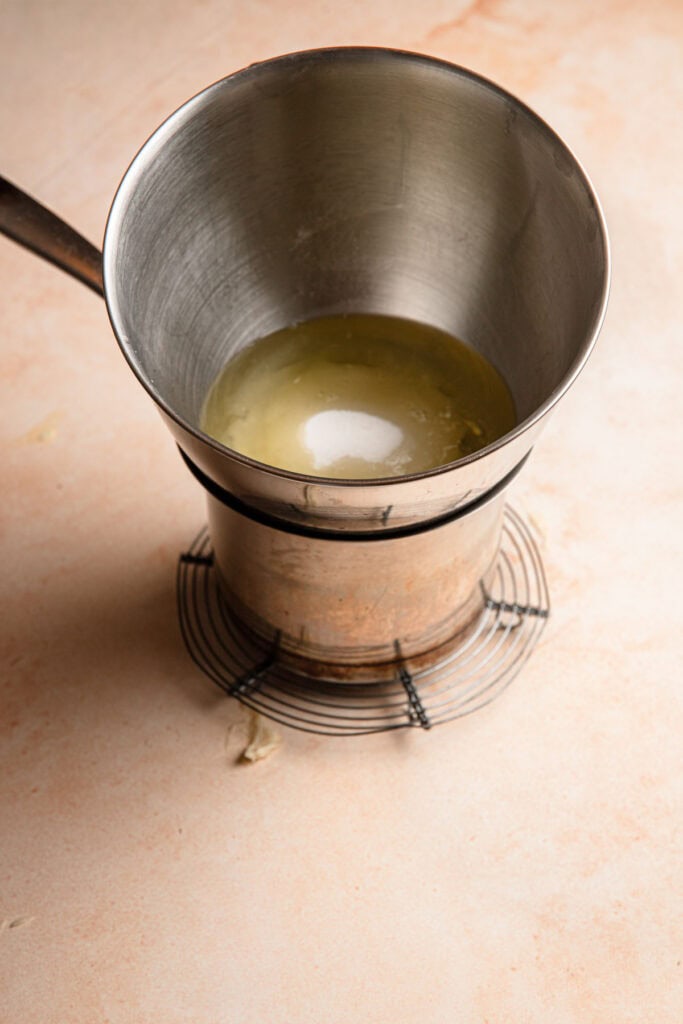
- Create a Double Boiler. Use a medium deep pan, fill it with eater about 2-inch high, and bring the water to a simmer. Top it with a bowl making sure the bottom of the bowl does not touches the water. If the pan touches the water then the temperature will rise too high and cook the eggs.
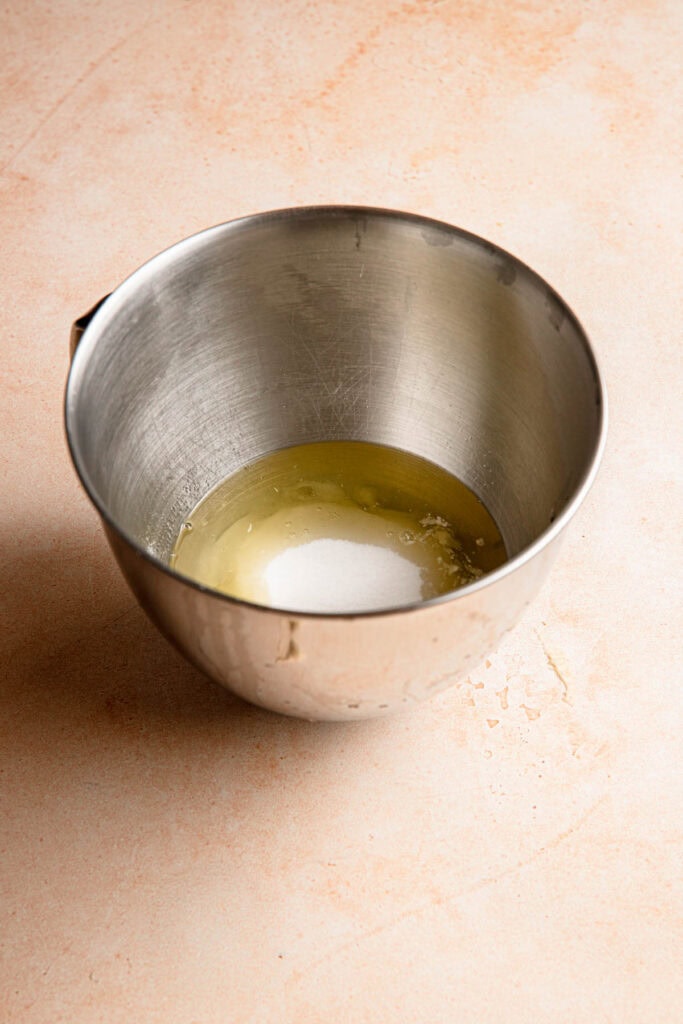
- Place the sugar, egg white, and salt in the bowl, and mix using a fork, or a whisk. Keep whisking until the sugar is mostly dissolved, and the mixture is 150-160F. If you do not have a thermometer, that’s ok. Dip your finger in the mixture, and rub it between two fingers, if the mixture is smooth, warm (almost too warm to the touch) with no undissolved sugar cook it while whisking for another 1-2 minutes.
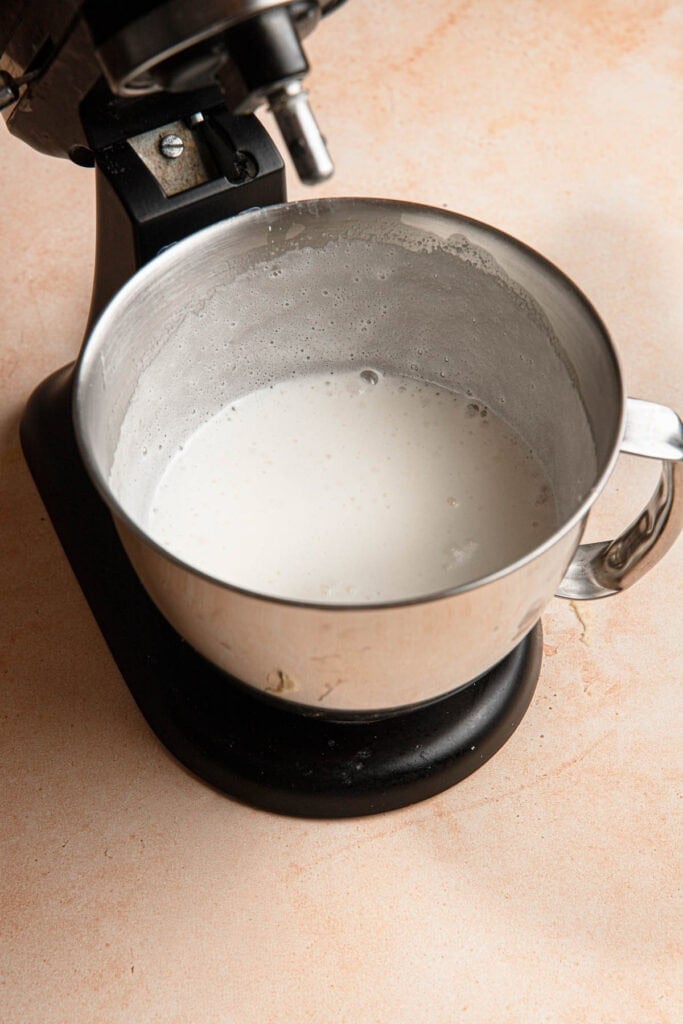
- Remove the bowl from heat, then transfer the bowl to a bowl of a stand mixer.
- Use the cage whisk to whip the mixture until it is bright white, thick and light. This should take about five minutes.
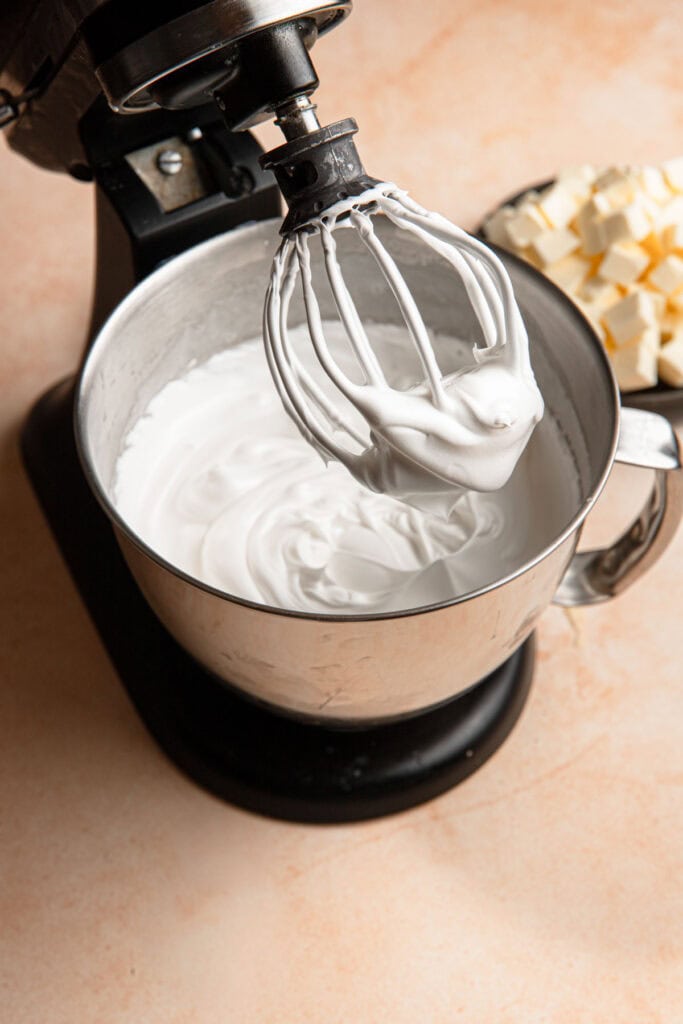
Make The Buttercream
- Once the meringue is thick, shiny, about 100-105F, add the butter, one piece at a time. Wait for the butter to dissolve into the meringue before adding the next piece, about 10 seconds. If you add the butter all at once, or too many pieces at once, the mixture will deflate and you’ll end up with a pool of water and some pieces of butter.
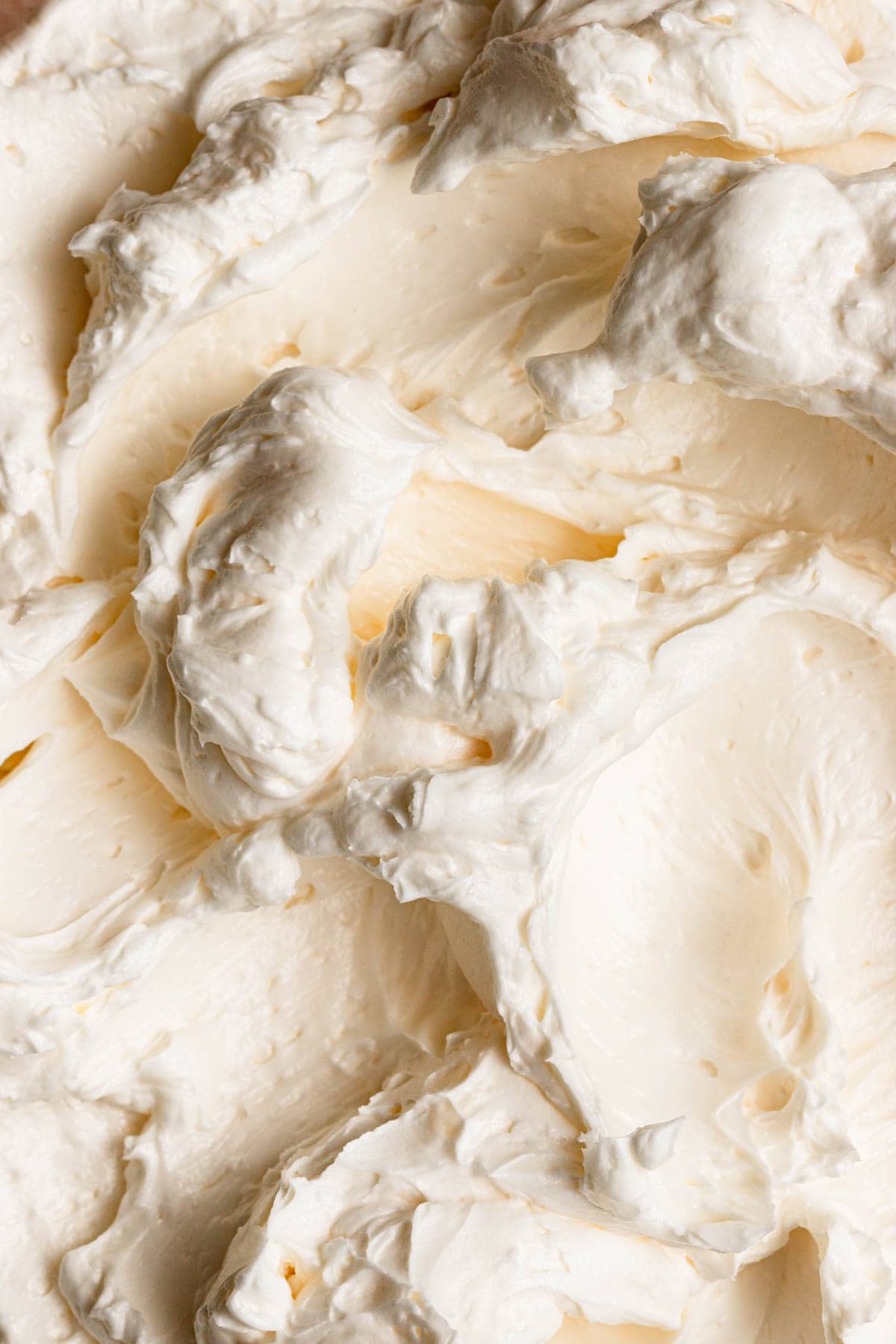
- Once you added all the butter, keep mixing on high speed until you have a smooth, creamy, thick buttercream.
- Mix in the vanilla. The buttercream is ready to be used.
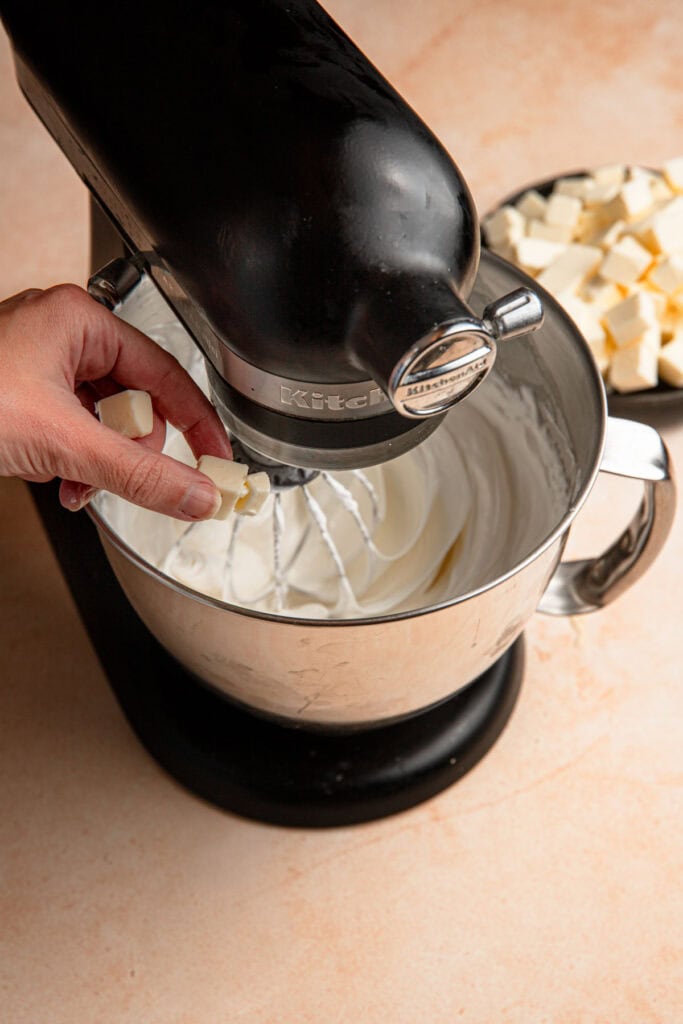
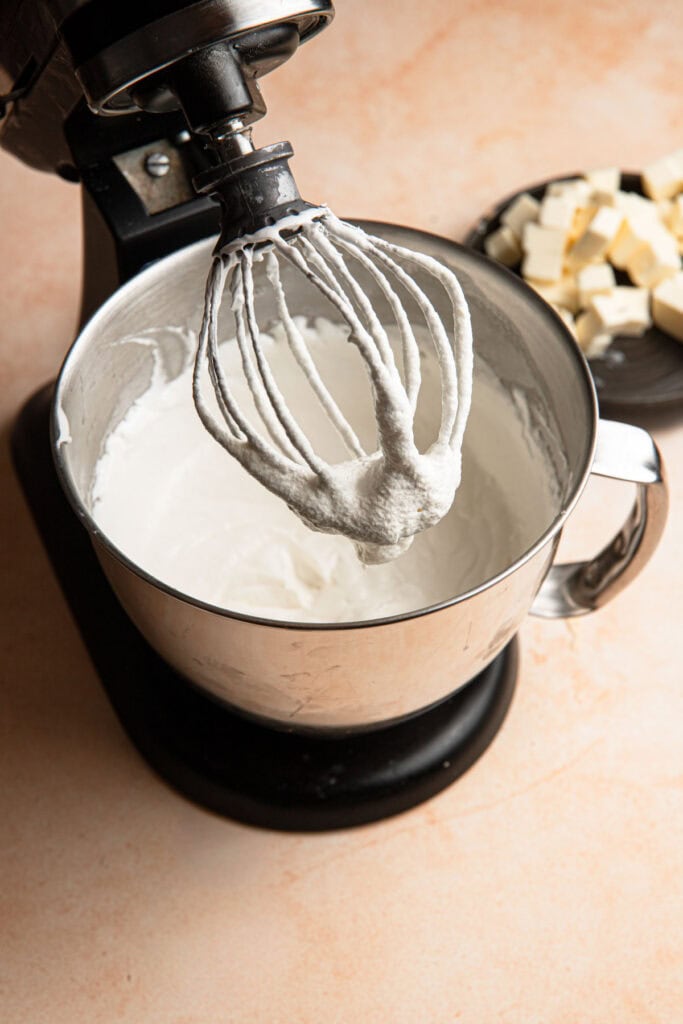
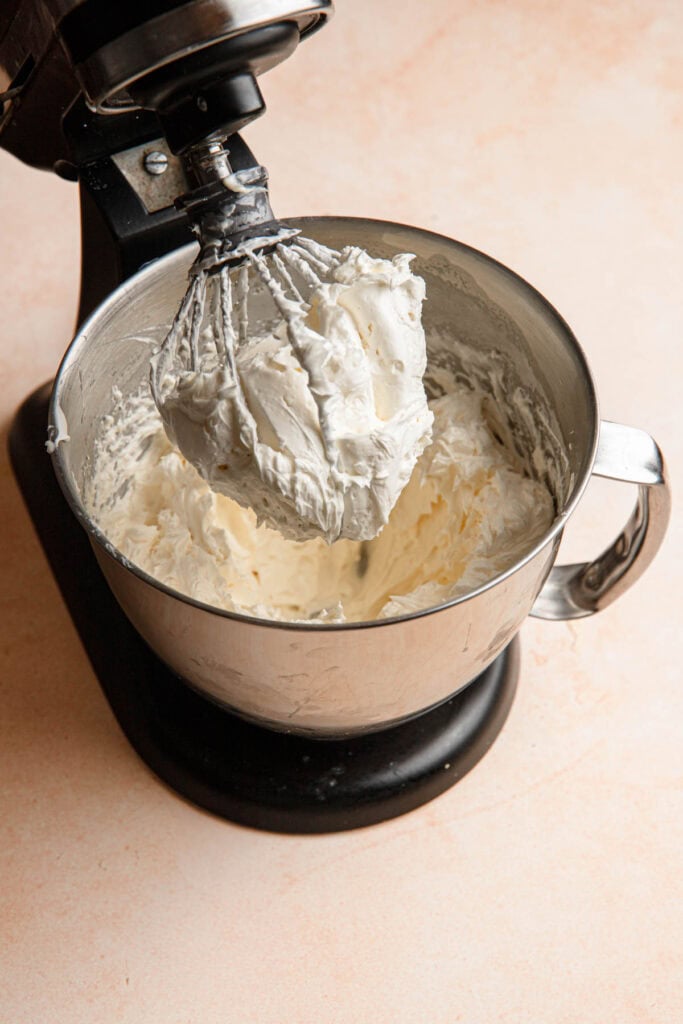
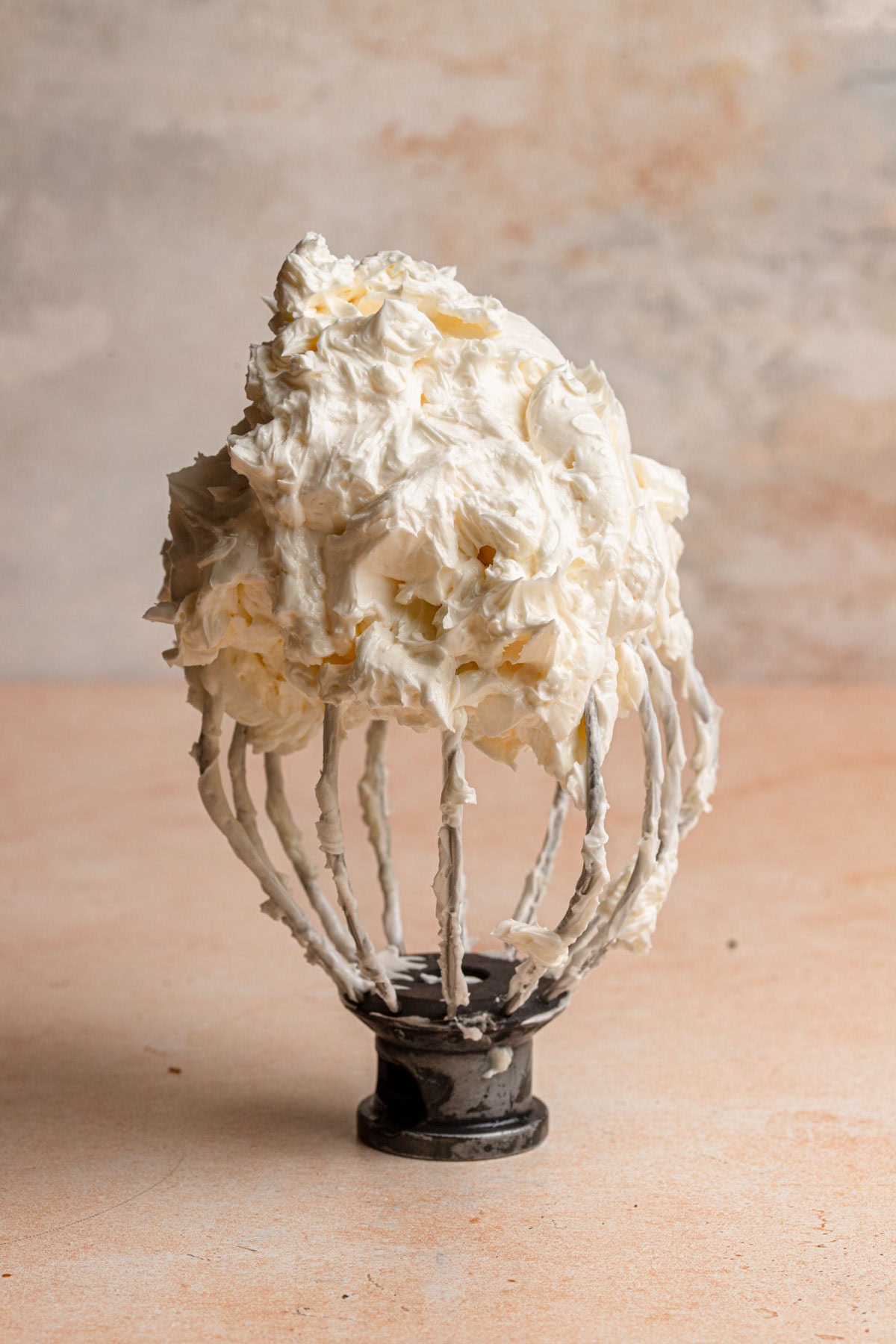
Here are the scenarios and how to troubleshooting
- The buttercream is too thin. That means that the meringue was warm and the butter melted as you added it. Just keep on mixing on high, the temperature will continue dropping as you mix and solidify within a few minutes.
- The buttercream is curdle. Do not panic. It happened when we add the butter too fast, just keep cream it will come together.
Coloring and Flavoring Buttercream
Coloring
Once the buttercream is ready, you can mix in a few drops of your favorite food coloring. Note that different brand will react differently with the buttercream. If you are un certain, use a small amount in a bowl for a pretests.
Flavoring
You can flavor the buttercream by adding a different flavored extract like strawberry extract, or almond extract. Another way is to mix in flavored ingredients like melted chocolates, or fruit puree. There is no thumb rule for all flavors and you’ll need to test and you go, just like the food coloring, if you are not sure, scoop some buttercream into a bowl and add the flavoring of your choice for a pre-test.
Yields
This recipe makes 2 cups of buttercream, enough to fill and frost one two-layers eight inch cake, or frost 12 cupcakes.
Serving and Storing
The buttercream solidifies when refrigerated and should be applied on and served soft at room temperature.
Frosted cakes and cupcakes can be store at room temperature for up to 48 hours, or refrigerated for up to one week.
Leftovers can be piled on a large piece of plastic wrap, wrapped tightly, and place in a freeze bag then frozen for up to three months. When ready to use, place in the refrigerator overnigh. Best to cream it in the stand mixer bowl to achieve smooth texture.
Easy Swiss Meringue Buttercream
Ingredients
- 6 Large Egg whites
- 1/4 teaspoon Cream of tartar
- 1 1/4 Cup (250g) Granulated sugar
- 2 Cups (450g) Unsalted butter at room temperature cut into 1-inch pieces.
- 1 teaspoon Vanilla extract
Instructions
- Place the egg whites, cream of tartar and sugar in a large bowl, or a bowl of astand mixer.
- Place the bowl over a deep pan filled with 1-2 inches of simmering water.Make sure the water does not touch the bottom of the bowl and the bowl sits tight on top of the pan, no gaps.
- Cook over medium low while constantly stirring using a whisk until the sugar has dissolved and the mixture is white, opaque and almost double in size.
- Remove from the heat and transfer to a stand mixer fitted with the whisk attachment.
- Whip on high speed until you have a thick, light and stable meringue and the temperature dropped to 100-105F, or is warm and pleasant to the touch.
- Add the butter, one piece at a time waiting for each piece to incorporate, about 10 seconds between each addition.The meringue will deflate as you add the butter and might seem too runny, or crudle. That is ok, keep adding the butter and mixing it will come together.
- Keep mixing until you have a thick, smooth and creamy meringue.
Notes
- Separate the eggs wen they are cold to prevent yolks from dripping into the egg whites.
- Fat, including yolks will prevent the meringue from whipping, so make sure to clean your equipment well before starting to make the buttercream. You can wipe the bowl and whisk with a paper towel soaked in some lemon juice to remove any fat residues you can’t see.
- The buttercream solidifies when refrigerated, and should be applied and served when at room temperature.
-
Storage for frosted cakes & cupcakes
- Keep at room temperature for up to 48 hours
- Refrigerate for up to 1 week
-
Leftovers
- Place on a large piece of plastic wrap, wrap tightly, and store in a freezer bag
- Freeze for up to 3 months
- To use: thaw in the refrigerator overnight
- For best texture, re-cream in a stand mixer bowl until smooth